

In every impeachment trial, there comes a point when the spotlight shifts. It is no longer focused solely on the accused, but also on the credibility of those accusing.
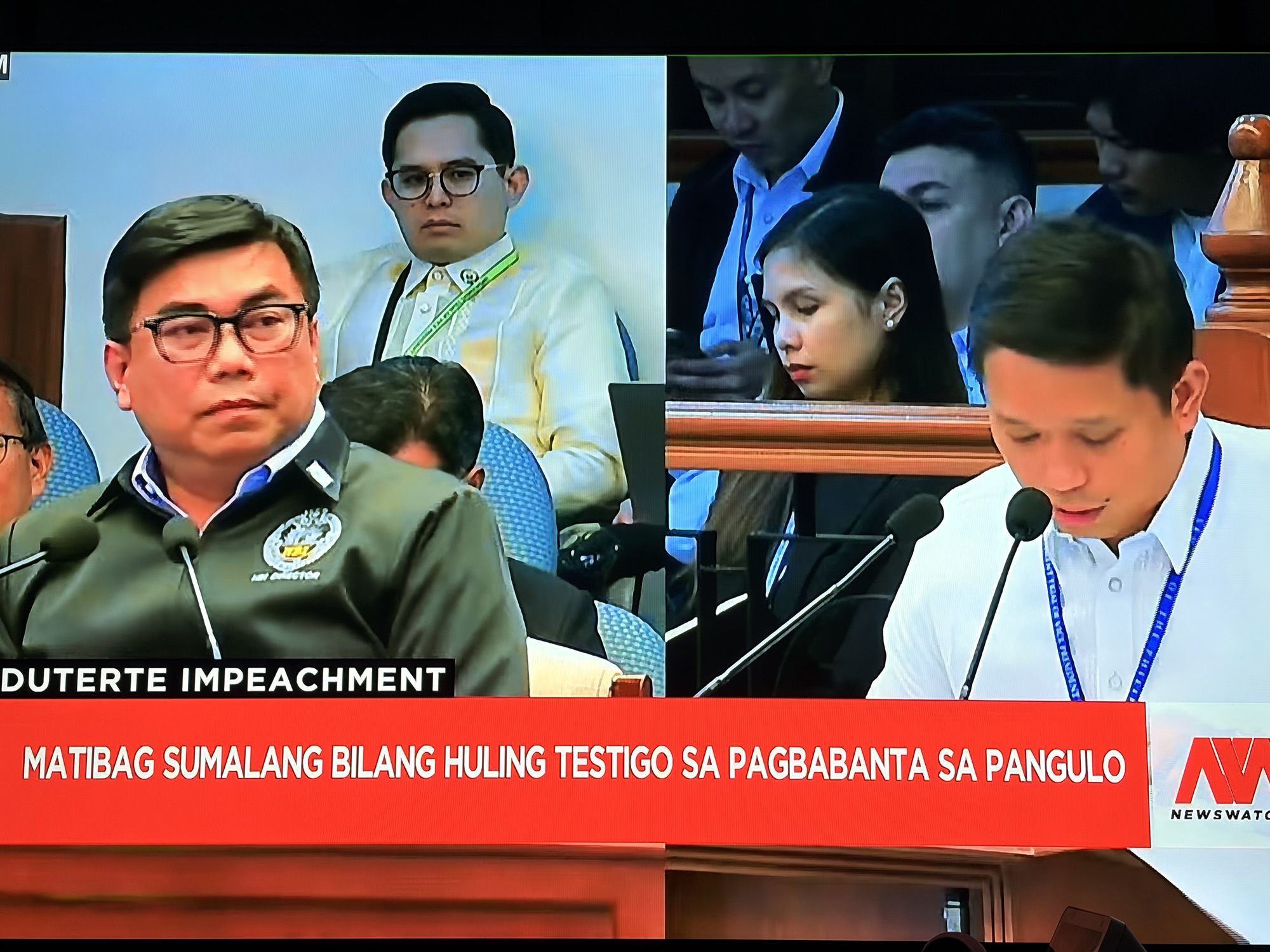
That moment arrived when NBI Director Melvin Matibag took the witness stand.
His testimony was expected to reinforce the prosecution’s case. Instead, it raised questions that extend beyond the facts of the case.
When asked to identify the portion of the video where Davao City Mayor Sebastian “Baste” Duterte allegedly threatened President Ferdinand Marcos Jr., Matibag requested permission to refer to his notes. There is nothing inherently improper about consulting notes. But when a witness is testifying about a key piece of evidence that has been central to a nationally significant case, the request inevitably invites scrutiny.
Then came another admission. Matibag acknowledged that he had an emotional outburst during a phone conversation with Mel Sabio, where he cursed and threatened him. Again, people lose their temper. It happens. But when the country’s top investigator admits to conduct that reflects a loss of composure, the public is entitled to ask whether emotions have played a larger role in this case than they should.
Perhaps the most consequential revelation, however, was Matibag’s acknowledgment that he authored three Daily Tribune opinion columns referring to Vice President Sara Duterte as a “bratinella.” He testified that those articles reflected his personal opinion.
Everyone is entitled to personal opinions. But public officials occupying sensitive positions in law enforcement are held to a higher standard—not only of actual impartiality but of perceived impartiality.
This is not about denying someone freedom of expression. It is about recognizing that when an official publicly characterizes a political figure in highly critical terms and later appears as a key witness in proceedings involving that same figure, questions about objectivity are unavoidable.
None of these revelations automatically invalidate Matibag’s testimony. They do not prove bias, nor do they establish that his statements under oath are untrue.
But they do affect credibility.
Courts weigh not only evidence but also the reliability and impartiality of witnesses. Public confidence in the justice system depends as much on the appearance of fairness as on fairness itself.
The impeachment court must ultimately decide how much weight to give Director Matibag’s testimony. Yet the larger question remains.
Can the public be assured that the government’s chief investigator approached this case with complete neutrality?
In a trial that could reshape the country’s political landscape, that question deserves a convincing answer—not because one side demands it, but because justice itself does.
Leave a Reply